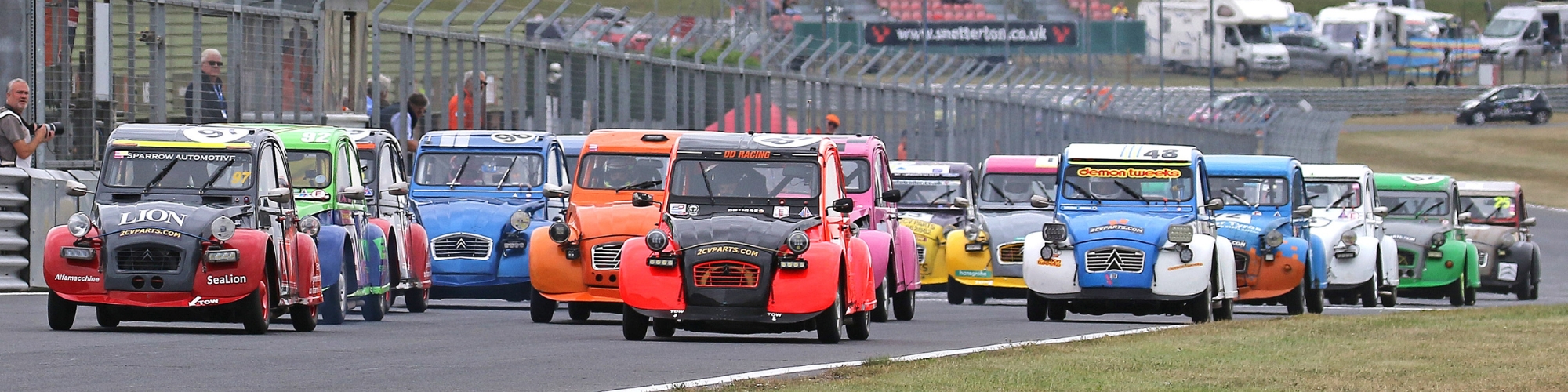
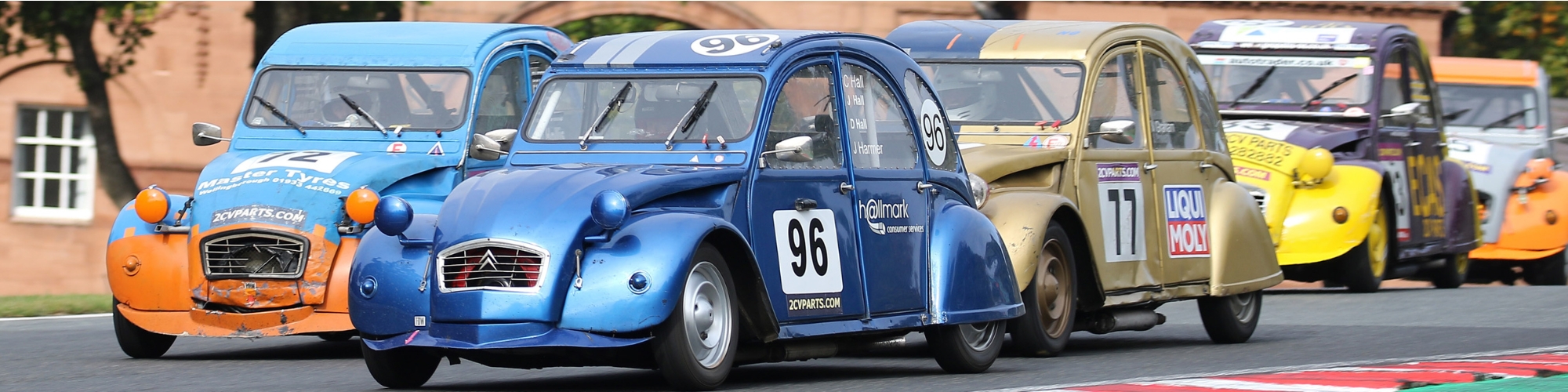
The longest event on the British Automobile Racing Club calendar this season – the 24-Hour 2CV race at Snetterton in the summer. The will, the adrenaline and passion to get you through and see your car cross the finish line – an emotional rollercoaster.
A challenge like no other – twice around the clock, balancing your own physical and emotional tiredness is one not only for the competitors, but the event team too with hundreds of volunteer marshals and officials needed to put on… the big one!
First run in 1990 at Mondello Park in Ireland, the BARC have worked alongside the Classic 2CV Racing club over the past three and a half decades, having taken the race to Anglesey in North Wales and Snetterton in Norfolk – its permanent home since 2017.
One man who knows how to do the business across a day in a Citroen 2CV is Englishman Pete Sparrow, one of three in an almost untouchable line-up. Along with Gary Adnitt, David O’Keeffe – the #97 2CV Team Lion outfit have won 9 of the past 12 24-hour races with the trio chalking up four wins together and 32 in total as an outfit. Sparrow added a 15th win in August – to become perhaps the most decorated driver in 2CV racing and perhaps across the wider clubman motorsport scene.
There is perhaps no better person to explain how to succeed in 2CV endurance racing. We put the big questions to the Citroen specialist as we tap into some of his extensive knowledge as he tells us how the race was won from his camp.
BARC: Coming into the race then Pete, with the amount of wins you had, does that put a target on your back. Is that a good thing for you?
Pete: “For me personally yes, because I have won it a few times. But the target we have as a team is not just about speed but our reliability. You can have the best drivers in the world, but if the car isn’t prepared – you are never going to win it. It’s so much of a team event, that people don’t actually realise how important that is. Some people go.. ‘Got to have the best engine,’ that isn’t the most important thing.
“You might be fine for a little while, then something might fall off the car, as it’s under too much stress. There are things that we do because of our experience. We might not be the quickest, but we try to prevent our car from failing, because we have seen so many failures over the years, we have that experience to deal with it – so experience is a key element. We do try and impart that to other teams, like the guys in the pink car who came fourth (Team Super Schnecke) who had a torrid year last year and were nowhere, and between two of us helping – we did a lot of suspension work on their car, another guy did the engine and wiring and they were flying this year.”
BARC: Preparation and experience are very important for a big race such as this – what other things would you say has brought you to the level you are at and kept you at the top?
Pete: “We have a plan coming into the 24-hour every year, and most of the time it gets done. Strategy, testing, preparation, but the most important thing is another P, and that is to not panic. At the start of the race you think you have to win it on lap one. There are other people who might be faster than you, the race will come to you if you let it. We couldn’t compete with the pace of the #89 this year on raw speed. We were expecting them to go hard at the start – the car is a carbon copy of our car so you expect with the drivers they have for them to be on it from the word go. I would have been happy if they won it – but there were bits in their prep they missed and the wheel came off – they will learn like we have done and they will be back even stronger.
“Each year we do a write-up after the event. What bits failed, why did it happen, what do we do to sort it and how can we prevent it from happening next time. Being fast for one lap is one thing but you have to have it for 24 hours.”
There was something else to add to the Team Lion debrief this year. A new alternator, a new battery perhaps? It got a bit close at the end. In fact in the final hour the #97 had to snatch their victory back from the jaws of defeat in the final throws of the race. Right when the chequered flag was in touching distance.
BARC: How was that from your seat Pete?
Pete: “I was tapping the steering wheel at the end saying, ‘you have been a very good little car’, and we have had no engine problems. I cursed it. Not long later – going down the back straight, I lost all my electrics- everything just went out. Gary [Adnitt], who I took over from said it hadn’t been charging for two hours. We didn’t need any lights on and I thought we would get away with it, until it all just turned off. I pulled off and managed to restart it and get it back to the pits and swap out a battery. We are racing cars that stopped being made over 30 years ago, so everything is old and tired. One of the gambles with 2CV racing, we are running out of a good supply of parts, and it may well have come from a second hand source. You can’t predict some things so there will be a time when fabricating and tinkering becomes more of a thing to refine and rebuild components.
BARC: You have mentioned patience, precision, experience and thorough detailing are key ingredients, but there is a race to win – what brought you home to the chequered flag first?
Pete: “Keeping out of trouble is very important – especially as it gets busy at Snetterton. We are probably mid-pack in the race with the C1 and Minis in front of us, so working efficiently in traffic is important and keeping that momentum up, every single corner, every single lap.”
BARC: If you don’t mind us saying – you’re not a team in your twenties, thirties or even forties any more – you have a lot of experience in your line-up – is age and wisdom more important than youth and raw speed perhaps?
Pete: “The cars do have a certain way about them. They are a little unusual to drive these cars – they are like old four-stroke hire karts, plenty of grip – but if you screw a corner up, you haven’t got the power to pull yourself out of something or make up time. If anyone has driven one of these karts – it gives you a good idea about the 2CV – you get crucified if you muck up a corner.
“We have a very good team of drivers, David and Gary have done well in championships and 24-hour racing in the past, and we have a B car or a sister car, were we had one of the mechanics sons doing it for the first time, my nephew in his second year and a chap from Germany who hasn’t done it for 10 or 12 years so as a collective we had different ideas and approaches which means we could split strategies, and we help each other as a unit over the race.”
BARC: Is it about tasting the champagne and lifting the trophy – is that your hunger and motivation for you still Pete?
Pete: “I have done all but two of the 24-hour races over the 36 years, and it is just the most amazing thing. We have teams who come across from France and they add a real flavour and different dimension to the proceedings – it is quite a unique event.
“The friendliness of it all is just special – people lend, help, borrow and jump in to get everyone to the finish. We had one car this year so badly damaged we couldn’t get it to continue. It was too badly damaged, but we would have done everything and anything to make it circulate again if it was possible. We get young people, older people, male, females taking part and even families. There is a friend of mine, Geoff Elbrow who did the race with his sons – such a cool and special thing to do. Wish I had done that with my Dad and brother!
“The guy who does our team management comes from Yorkshire, I have come from Hereford, the bloke who owns the car is from Birmingham, there are people from the West Country in our team, everybody descends and everyone gels together and the team spirit is so vitally important and so very special to see everyone each year.
“Seeing your car come home is the dream come true and the best bit. Martin, who owns the car is 77 or so and even now, always has a few tears in his eyes and it’s special every year to get your car home – win or lose. That’s what brings me back. Not the glory or champagne, it’s the memories and the people we meet, seeing the youngsters come in and work their socks off to get a car home – it’s brilliant.
“It’s nice to win – but it’s about the whole weekend, and I have to say a huge thank you to everyone that puts this fantastic meeting together. The marshals, the officials, to BARC everyone does so much to make this happen it’s a big challenge. A big thank you to all the people not behind the wheel as well, that don’t drive the car and don’t hold up a cup – the mechanics, the guys that feed us – the whole team. Everyone is vital in what they do and excellence everywhere pushes us all on.”
BARC: So, what does the future hold for you and the championship?
Pete: “I will be back again for the 24 Hours – can’t keep me away I just love this one too much. The 2CV championship started the low cost endurance racing. 30 years ago – nobody wanted these cars and they were being chucked away – now they have become a collectors item. Will they stand the test of time? Hard to say, but it gives people a chance to go racing for a sensible cost for a car that is easy to work on, satisfaction in driving and you learn while doing it.
“Who the hell wants to race a 2CV, some might say! It doesn’t matter if you are racing at 200mph or 20mph – so long as everyone is at the same speed – it’s so much fun – it’s all about the close competition, camaraderie and fun. Everyone loves them and we forget how much this car is loved and how this car brings people together.
The 2025 season brings to an end a 35 year partnership between the British Automobile Racing Club and the Classic 2CV Racing Club. We wish the club every success in 2026 and beyond. We hope it’s just an au revoir for now.
 Home
Home